Polls over, panchayat rule in Bihar set for overhaul
Bihar is set to transform rural governance by gearing its panchayati raj institutions (PRIs) towards delivering at the grassroots, state's panchayati raj minister Samrat Choudhary has said.
Patna — Bihar is set to transform rural governance by gearing its panchayati raj institutions (PRIs) towards delivering at the grassroots, state's panchayati raj minister Samrat Choudhary has said.
In an interview to HT, Choudhary said quality of work will also be regularly monitored and accountability ensured for every rupee spent.
"The emphasis now is to work with a transparent system. Panchayati Raj Bhawans are being built so that it could work as a secretariat at the grassroots level and the people could get their work done through a centralised system in panchayats. At present, there is no proper system for audit of funds, leading to non-submission of utilisation certificates or monitoring of work being done," the minister said.
Utilisation backlog
Choudhary said that the report of the comptroller and auditor general has also pointed to non-submission of utilisation certificates for around ₹37,000 crore of funds spent through PRIs. "It is important to know the trail of funds spent by PRIs, but right now there is neither any engineering cell nor any mechanism for periodic auditing. For the piped water scheme alone, the department has given ₹2000 crore to the public health engineering department for execution. More funds under different schemes are coming and efforts are on to create a system for it," he said.
The minister said the government would now appoint audit officers at the block and district levels for up-to-date figures at the state level. "Now we are creating an engineering cell for executing and monitoring work, which will also track the fund flow for different schemes. There are also efforts to reduce red tape by appointing dedicated officers. The panchayati raj officers have already been notified as the new executive officers of panchayat samitis, replacing the block development officers (BDOs). Now the role of district development commissioners (DDCs) will also be curtailed with CEOs in place," he said.
Quality control
Quality has been a major constraint for the work being carried out in the panchayats and blocks, be it is the tap water scheme or the construction of rural drainage and roads. The minister said the quality aspect would be taken care of with the constitution of state quality monitor (SQM), which would supervise and inspect work down to the block and panchayat level.
"The SQM will comprise retired officials from the administration and engineering fields. We have already created 131 posts. Besides, there will be 8,000 executive officers. When I assumed the charge of the department in February 2019, there were around 4,000, which will bow be increased to 8000 so that complaint redressal at the panchayat level is never disrupted due to deputation of officers for elections, Covid or any other requirement. We are also going to get 3000 more panchayat sevaks within a month in addition to around 3000 already there," he said.
The minister said that the department has also decided to ensure that the panchayat secretariat runs properly. "There will be schedule for officers from various departments to address people's complaints and issues on assigned dates and carry forward real development work, which will pick up momentum in the coming years," Choudhary said.
Increased fund flow
The minister said that under the 15th Finance Commission, the Centre would give Bihar ₹1000 crore through the panchayati raj department every year for the next five years to cater to healthcare needs in the rural areas. This will involve setting up primary health centres (PHCs), additional PHCs and health centres as well as supply of medicines.
"At present, we get the work done through health department on the recommendation of the local MLAs. Now we are making provisions so that the work could be done directly through the department. The idea is to make panchayat government fully functional and accountable," he said.
Eco-friendly
The department has embarked on an ambitious mission to revitalise wells and around 82,000 of them have been identified for the purpose. The minister said all new Panchayat Bhawans would now use fly ash bricks and blocks only. Earlier, traditional bricks were used, which were not eco-friendly.
"Each Panchayat Bhawan costs around ₹1-1.5 crore. Around 3,000 Panchayat Bhawans are being built and more will be required. Environment protection requires major work and that can be done at the panchayat level only," he said.
Arun Kumar is Senior Assistant Editor with Hindustan Times. He has spent two-and-half decades covering Bihar, including politics, educational and social issues.
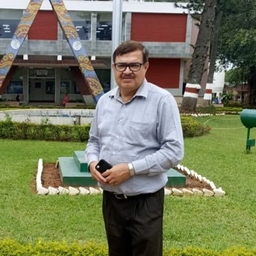
About the Author
Arun Kumar is a veteran journalist and Associate Editor with Hindustan Times, based in Patna. For more than three and a half decades, his reporting has chronicled Bihar's complex political landscape, university and educational reforms, landmark judicial rulings of the Patna High Court, administrative governance, and social shifts across the state. Known for deep investigative reporting and source-grounded accountability journalism, he is a recipient of the prestigious K.C. Kulish Journalism Award and the Keshav Bhatt Journalism Award, and is an LDM Fellow.